Against AI Crankiness
I disagree with George’s take on AI here, but paradoxically support everything he has to say about writing, especially this:
“Struggling through reading or writing a long-form piece does magical, essential things to one’s brain, i.e. to one’s essential personhood.”
Can deep effort and AI be reconciled? I think so. You can use AI in your process without having it write a word of your prose. If you use it with intent, it can make the process longer, harder, and filled with weird or delightful frictions. Of course, this is not how most people use it. For most people it’s a shortcut machine. But if you have enough taste to know that today’s AI prose is flat, and enough experience to know the value of toiling through multiple drafts (for the piece, and for you), then it’s possible to use these tools without having them corrupt you.
He says AI is, “dangerous, because, as we are now finding out, it affects the brain and lessens our capabilities.” He may be referring to the 2025 paper called “Your Brain on ChatGPT: Accumulation of Cognitive Debt when Using an AI Assistant for Essay Writing Task.” Most people don’t read the actual paper. They ignore the small subgroup of students who drafted unaided but then used GPT to guide revisions, which showed increased “neural connectivity and engagement, with memory recall and activation patterns.”
Basically, I only advocate for AI as an editor. I can imagine George’s response, insisting that the whole point of feedback is to understand how another human responds to my ideas. He wouldn’t be entirely wrong. Whenever I have a draft, I try to get impressions from a wide range of people: my wife, different editors who obsess over craft, general readers who never think about words, and people close to the subject who know things I don’t. AI is just another perspective. Out of the box, it gives you mass opinions (which can sometimes be useful, even as foils). But you can also use it to rotate ideas in personal and idiosyncratic ways. AI is best when it prompts you. I almost never use it to help me write a sentence, but am often using it to try to break my frame of thinking so I can reconceptualize my idea in a more specific, more compelling way. I’m currently 9 drafts into an essay; AI just shattered my thesis, and now I’m going to start from scratch on v10, based on an approach suggested by a friend. I missed my deadline because of AI. Very inefficient, but it will make the essay better.
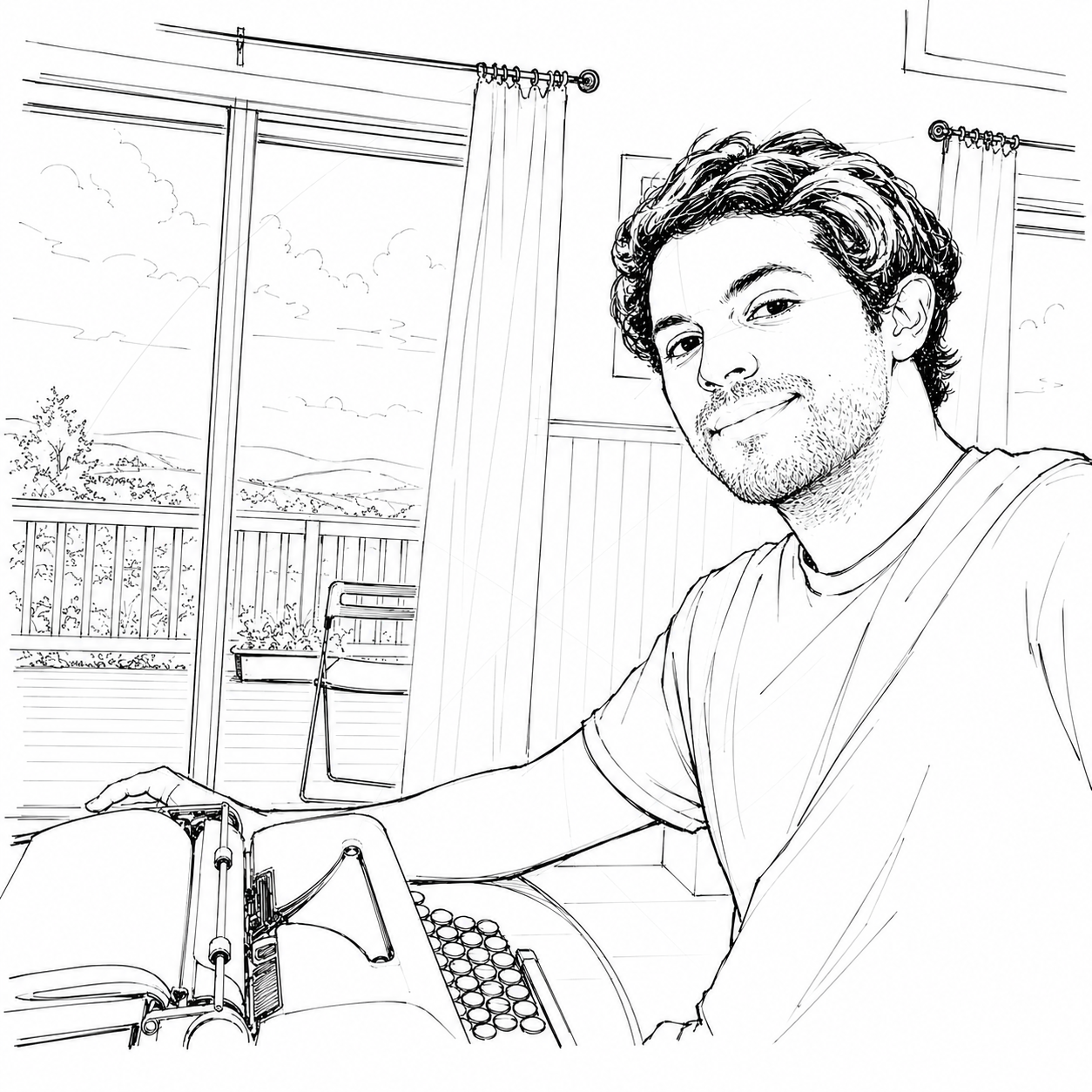
I also agree with George on the value of printing out your draft and editing with a pen. That’s one mode of many modes. Even handwriting is a technological augmentation, and sometimes I’ll regress to composing with voice. I find value in moving up and down the stack, from voice, to handwriting, to typewriting, to word processing on a computer, to using AI in highly experimental ways. To quote a quote from his piece: “No worthy problem is ever solved in the plane of its original conception.”
It’s ultimately about balancing the new with the old. While it’s extremely handy to have all my past notes and Kindle highlights accessible through a mechanical subconscious—where they emerge in the margins as I write new sentences—it would be foolish to have that be a total replacement for my actual subconscious (the ability to forge new images and associations in the moment). It’s not either/or, but both. Any system that destroys presence isn’t a system worth keeping.
Everything I’m suggesting probably only makes sense if you’ve put in several thousand hours into analog creative processes. When it comes to schools, I basically think AI should be banned. Or at least, high schools and colleges should have structured assignments and exercises that require students to shift between analog and technological modes.
There are many reasons to hate AI, whether it’s the slop, the scam literary prizes, the fatigue from endless debate, or the rate of progress. The existential context fuels a moral crusade against writers who like AI. But I wonder, for all the writers who hate AI, how many of them secretly loathe the editing process too? What is a more reliable indicator of virtue, the open-ended tool you use, or your willingness to struggle through an idea? If you care foremost about the quality of your work and the range of your process, then does it make sense to shut off your curiosity to a powerful, flexible tool you’ve barely experimented with? If you’re thoughtful about it and honest about its limitations, it could take you further.
Tech nerds tend to rush into technology and use it in boneheaded ways, while romantics tend to resist change and cling to older paradigms. My advice is to do both. Pay $20/m for a Claude Pro plan and give Opus 5.5 an earnest try for editing. Also go on Etsy and buy a used typewriter for $300. We’re about to see a fork between accelerationist and retro movements. It serves you to understand the value in each.
A tool isn’t inherently virtuous or not; how you use it is an expression of your virtues.