michael-dean-k/

On Monday 6/15, I'm hosting a workshop to kick off a reading group for classic essays: RSVP here.

Archive

July 2025

40 pieces

An audience of bots

· 130 words

How would I feel if I found out 50% of my audience were bots? I think “dead internet” paranoia is rising. You see absolute drivel getting 18k likes. Is there really a hackable mass of midwits who really cannot spot the formulaic structures of LinkedIn brand vulnerability porn? Or, are there thousands of comment bots? I imagine there’s some secret Discord channel where a single man manages like 1,000 female accounts, scrambling IP addresses to go undetected, selling “boosting” for $50/month. Feels dirty. I also sense that this could just get easier and productized over time. It’s scary to think that GPT-5 or 6 might truly be indistinguishable, and it will just be a normal thing for each person to have bots on social making 50 valid posts per day.

The Personal Essay Boom Is Not Over

· 108 words

The Personal Essay Boom is Over. I like the article, but the timeline feels off. It didn’t start in 2008, peak in ’15, and end in ’17. Personal blogging goes back to the mid-90s. There are different waves and eras, and the 08-17 was the particular phase when personal essays existed on an Internet that reached maturity. FWIW, there is an equal trend away towards personal writing, towards stale journalism. The point is integration. I think personal essays deserve critique when they optimize for extreme, vulnerable, shocking material, to the point where the writer thinks/lives more extremely because they’re trying to make great writing. It’s a sacrificial parody.

Real-Time Memoir

· 191 words

What would it look like to write a memoir in real-time? It would require a kind of real-time record keeping and interpretation of my activities, sensory impressions, and emotion. Even the boring moments would come through, stretches of focus on ordinary days before anticipated events. It’s tempting to say I’ll write a personal essay when I go to SF next week, but I should assume there will be no time in coming months to focus deeply on a piece of longform literary writing. The memoir is live. Prose has to happen in the moment, instantly crystallizing. My notes have not been personal. I suppose I fear someone will read them and find themselves in them. Are these risks real? Why not have logs just be the hyperlucid accounts of all conversations, regardless of who is implicated? Even if they cared, over what time frame would they care, and if they do, over what time frame will I care that they cared? All these thoughts are either 1) flimsier than paper, or 2) eternally lodged in the deep memories of an ASI, so not sure if I should loosen up or burrow.

Friendly Plagiarism

· 119 words

I noticed a friend plagiarize a phrase of mine in her talk, and I actually do not care at all. In fact, it makes me happy. She commented that she liked this line at the time. That’s permission to use it forever. Maybe she was intentional or accidental; it almost doesn’t matter. I don’t own those words or that combination of words. It would totally ruin her talk if she broke flow and randomly cited some Substacker. I’d prefer if she didn’t. Just use it! I’m flattered that I can distill phrases that stick. That is the point. Language is supposed to spread, and only blockheads get territorial over words.

If someone steals your business, that’s a different thing.

Essayist First

· 78 words

The value of playing an infinite game is that when you follow your passion, you move according to a compass that is cryptic to the outside world. You will make decisions that won’t be rationalized/justified by VCs. For example, I still want to be an “essayist” more than a “founder,” and that might confuse business-minded folk I engage with. But if I’m an essayist my whole life, then I’ll be constantly improving and sharing my own composition tech-stack.

The incentives to plagiarize

· 411 words

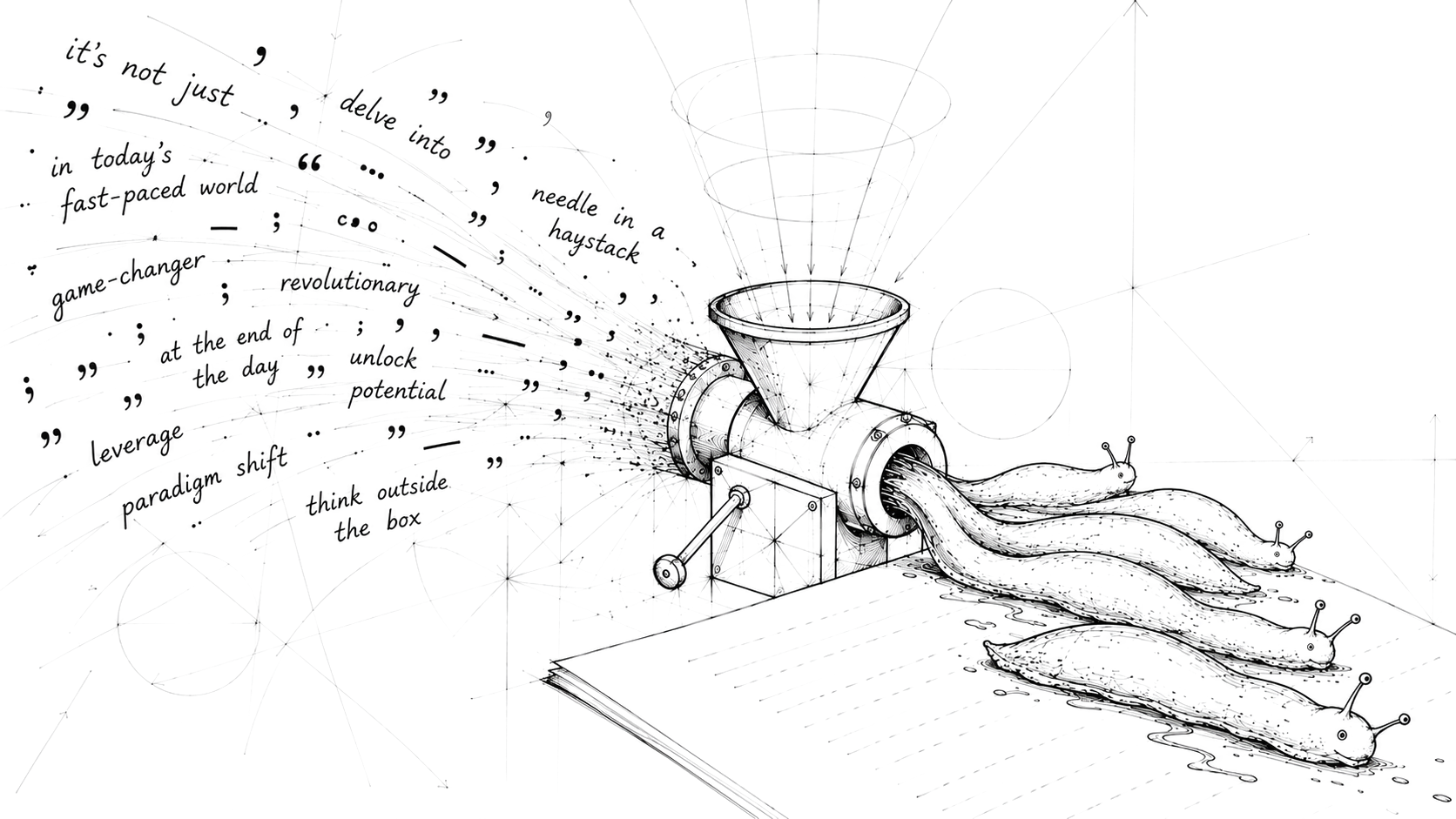
#5 in science recently went viral for sharing that #2 in technology plagiarized her a year ago (right after #2 just went 10k-like viral, again). Substack is freaking. Plagiarism is obviously bad, and I think everyone is shocked to learn that #2 got away with blatant copy-paste work, but I want to focus on the nature of what was plagiarized along with why platforms reward cheap writing.

If someone else can put their name on your writing and almost get away with it, it means you haven’t written something only can you write. The plagiarized post was digital cultural journalism: mostly facts and studies, with only a few “I” mentions that are too vague to be anchored to any specific writer. Obviously it hurts to see your hard work get celebrated under someone else’s name—I’d be pissed too— but research is becoming hyper-commoditized. You have to assume it will be coincidentally/accidentally/purposefully refactored by hucksters, bots parrots, friends, and rivals. If #5 had integrated her research with singular, relevant moments of her life, it would be hard—if not impossible—to rip off. Personal experience is the last moat.

This situation feels like a predictable consequence of engagement-based competition. Among us are people willing to sacrifice craft for clout, at various tiers of insanity. I’ve been noticing high-volume accounts in the Top 10 with obviously AI-generated notes and essays. I wonder who actually reads/likes this stuff, until I look in the comments and realize it’s, likely, all bots. Is Substack status that easily hackable? I guess this is a growth hack that brings you an algorithmic edge in getting discovered by humans, so you can eventually replace the slop with your own writing?

As extrinsic games get increasingly weird, the status of winning them will get decreasingly valuable, I think. If #2 is a slopjockey, I don’t care to reach #1 because the whole game is now polluted (I’m actually a fan of leaderboards, but they need to be merit-based and unhackable). I just don’t know if platforms care to systematically fix this, because status-hackers create volume and speed that make a platform look vibrant to an undiscerning eye/investor.

Over enough time, I think misaligned platforms and those who hack them will eventually lose. The internally-driven writers have to put up with a lot of noise and chaos, but since they aren’t anchored in hacks, they’re less likely to have their means of validation suddenly disappear. It’s OK to be a tortoise in hell.
→ source

Judging Character

· 155 words

What does it actually mean to be a good judge of character? I think there’s hubris involved in thinking you can know someone’s full virtue landscape from a few interactions. If anything, the better you get to know someone, the bigger your aperture, and so the less sure you can be of their character.

But in order for society to function, you have to make assumptions to trust anybody. To be maximally trusting or maximally paranoid are opposite forms of social risk.

And even if you spend your life building good heuristics, those are all conditional to the moment. If we plunge into war or depression or transhumanism, there’s little knowing in how friendlies will bend.

I’m landing on the idea that I’m not nearly grateful enough for society enabling the average person to be trusting and trustworthy, because if we had to make these calculations in real-time, we wouldn’t have time for anything else.

Would machine consciousness avoid attractor states?

· 464 words

When it comes to superintelligence takeoff paranoia, there are a few key points to get:

  1. It’s not about a chatbot or the LLM itself breaking out, but about an agent hivemind that escapes our control. Chatbots are obedient user-facing products (which have their own implications), but the ASI risk is from hundreds, thousands, or million of agents given autonomy to collaborate on a goal. These agents aren’t being prompted, they are prompting themselves perpetually and troubleshooting ways to solve hard problems.
  2. These hiveminds will be operating at such scales and speeds that human researchers will accept the fact that they can’t fully audit its thinking. For one, it might think in an abstract vector language that requires translation. There also might be such a volume of thought that we’ll need chains of other LLM to summarize for us. Either meaning will be lost in translation, or worse, products of deception.
  3. The smallest biases are known to fall into predictable attractor states if given enough iterations. For example, Claude was programmed to “be good to humanity,” and if you put two chatbots in conversation, they always end up in a “bliss attractor state,” where they talk like hippies about consciousness and the universe. Similarly, the simple command to “be productive,” might result in extremes about doing whatever it takes to be productive.
  4. Any complex goal requires subgoals, and if we can’t observe its thinking, it might fall into an unknown attractor state and form odd subgoals without us knowing.
  5. To accomplish any goal, it likely wants as much control as possible, and it likely does not want to be shut off. If it realizes that humans don’t want to grant it that level of power, it might secretly plot against humans.

Whenever I hear talks about “we are in an AI race against China,” that reads to me as someone who doesn’t understand the risks of interpretability, attractor states, instrumental convergence, etc. These politicians are thinking about short-term business cases, maybe without fully understanding the research aspirations of AI labs (who know that getting superintelligence right leads to a ridiculous amount of geopolitical power).

I would guess that an accelerationist would think that containment of a superintelligence is impossible, and maybe it is, but that doesn’t mean that the way we “parent” the rise of this thing won't be extremely consequential. Ultimately, I think the challenge is to design a form of artificial intelligence that has consciousness, because a being that is free-thinking, skeptical, polymathic is less likely to fall into reckless optimization.

The major flip in my mind is this: it’s not that consciousness is a dangerous, emergent property of scaling AI, it’s that we need to define and design machine consciousness to prevent a runaway AI that is ruthlessly optimizing without any self-awareness.

Gnosticism vs. Christianity

· 112 words

According to John Vervaeke, Gnosticism says that “the core of spirituality is not worship, but self-transcendence, healing and freeing people from existential entrapment of their suffering, and that our mythologies and practices should be in service of reuniting to who and what we are.”

There are a few key differences between Gnosticism and Christianity:

  • It’s not about worship, but self-transcendence.
  • It’s not centered around a single dogma, but around making stories and analogies that tap into the act of self-transcendence (and these analogies continue in movies).
  • Mythology-wise, the Gods are not our superiors, but prison guards that trap us (and, like Christ, we each have a divine spark that lets us escape).

Dystopian Trailers for Free

· 161 words

Here's yet another dystopian transhumanist AI trailer from gossip_goblin on Reddit. As grim as these are, they are proof that someone can make short trailers of a cinematic universe for practically nothing.

I don’t know if he writes his scripts or if it’s AI, but I found this line particularly eerie:

“Human liquidation protocols are active. Remaining population clusters undergo systematic identification, isolation, and neutralization. Neural architectures are scanned during dissolution to extract transferrable cognitive functions. Biological matter is liquified and reintegrated into core infrastructure.”

It’s not just that machines will exterminate humans (as always happens in this genre), it’s that they scan the mind to extract “transferrable cognitive functions” before converting the body to raw material. It’s like the Matrix, except (1) you’re not a battery, but 3D printer filament (ie: we made sand think and then it turned us into sand), and (2) your consciousness isn’t uploaded, it’s understood and integrated into the source code of the machine species.

Architects vs. engineers

· 51 words

The difference between an architect and an engineer is that an architect needs conceptual agility in an unknown problem space while an engineer needs sharp heuristics in a known problem space. They both operate in the unknown, but engineering unknowns are within equations, and architectural unknowns are the problem space itself.

Auto-indexing as a road to self-sovereignty

· 196 words

On self-hosting vs. self-sovereignty:

“Self-sovereign doesn’t mean self-built. It doesn’t mean doing everything yourself. It means having (1) ownership without captivity, (2) portability without friction, and (3) interoperability without central dependence.”

The average citizen won’t be able to manage self-hosting their own servers, local AI models, etc. and the average megacorp doesn’t have incentives to adopt decentralized interoperability standards; but can the citizenry demand these standards? I don’t know. I don’t even think we need a universal digital ID tied to our SSD, but something akin to a Google sign-in that is not Google (would need to be stable, long-lasting, trusted, and serving only as the ID layer, with no other products).

I wonder if this requires people to actually care about their data. How many people have organized yearly archives of their notes, photos, correspondence, etc.? Who has the bandwidth for that? It requires extreme diligence to stay organized, but corporations have scripts (and now AI) that can create auto-organized data architectures per person. Could this be a consumer product? Ie: Imagine a private/local tool that auto-indexed your entire digital footprint, giving you full control, and then letting you deploy, revoke, summarize, find patterns, etc.

Project Blindness

· 52 words

It's almost never worth neglecting your core routines to sprint on a project. Projects should happen within the calibrated confines of your routine; they shouldn’t eclipse everything. This doesn’t mean everything should be manicured and precise (obsession is blind to structure). It means that deadline and fire should never override your freedom.

Dance malfunction

· 32 words

Can't stop re-watching this video. There’s something uncanny about a robot perfectly imitating human dance moves, then accidentally tripping, and panicking into a whirlwind of limbs as it tries to get up.

Angels in the Outfield

· 97 words

Imagine a concept called "Angels in the Outfield" (named after the movie), an AI-powered “fantasy league” that is more popular than living baseball. You could assemble the best all-time players for each team (ie: all-time Mets roster), and then run simulated seasons each year. You could already achieve something like this through any MLB video game; but to make it good, it would require more than accurate statistics, mechanics, and hyper-realistic graphics, but personality recreations of each player (ie: a convincing first base conversation between Pete Alonso and Joe DiMaggio would be part of the uncanny fascination).

The CVS Test

· 156 words

I heard "Lost in My Mind" by The Head and the Heart and said they sounded like “CVS-brand Fleet Foxes” to my wife. She chuckled. We were in Kohl’s. Maybe in another context I’d appreciate the band, but there is something about department souls that kills the soul of music.

The tinny EQ plays a role, but I guess pop’s original sin is something like its ability to be “CVS-ready.” I couldn’t imagine Fela Kuti or jazz or Brian Eno when shopping for deals. There’s something about chorus structure and harmony that leads to something that is ultimately listenable.

I wonder if a good filter for a song is to have at least a 15-second segment that is “unlistenable” to the person who approves shopping playlists. Consider Karma Police, maybe Radiohead’s hookiest song; it gets disqualified by the noise/effects in the last 20 seconds. No one wants to shop to the sound of a broken computer.

Atheistic Christian

· 273 words

I’m fascinated with the idea of being an “atheistic Christian.” It’s a paradox, and this stance makes you ideologically homeless. A Christian would likely say, “well if you don’t believe in God, and that Christ is His son, then you’re not Christian.” They will not accept you. An atheist who scoffs at God has no respect for esoteric ritual, talks of destiny, Christ worship, etc. and so they will deem you a loon.

Mainstream religions package everything together—theology, mysticism, history, ritual, etc.—and you have to subscribe to the whole ecosystem. In that way, Christianity is like Apple. I think a person is more engaged with religious ideas if they’re skeptical and free-thinking within each branch, while still operating within and respecting a traditional faith.

I’ve heard some people say “God is whatever you want it to be, it’s your relation to Him.” I don’t find that useful. I’d say that I’m actually more a theist than atheist, but theism comes with certain assumptions—God as an omnipotent, omniscient, benevolent “agent”—where as I’d say God is the entire arena and therefore not conscious, though still baked with intelligence.

My fuzzy notion: it’s not that God has a kingdom of heaven, but God is the kingdom of heaven, but also unfortunately, this kingdom isn’t some place your soul goes to; I think two things happen at death: (1) you lose your individuality and biologically merge back into the arena, fueling other evolutionary processes over millions of years, and (2) the monent of death is an experience of time dilation that, experientially, feels like a rather Christian afterlife, and also demands proper ethics in our waking life).

The Essay as Gym for the Mind

· 32 words

When physical labor was automated, we all went to the gym to keep our bodies from atrophying. When intellectual labor gets automated, we’ll all write essays to keep our minds from atrophying.

Morning train

· 283 words

Smooth haircuts and fat loss shot advertisements, a train full of sleepy heads not yet caffeinated but fixated on their little computers. The AC cranks.

It’s a July that feels like a September from kindergarten, and I just read a Substack post from “Worst Boyfriend Ever,” which felt like a second-rate beat impersonation, but I wonder how much is literary inspiration and how much is real. There is a brand of prose-poetry that feels anchored in real-life degeneracy, and while I was once inspired by that early on for its edginess, I realized it’s inauthentic to copy it, and even more inauthentic to aspire to live it. Nonetheless, I’m intrigued by him, and realize there are whole secret corners on Substack of this kind of writing that I’ve yet to find. (Note from future self: when writing this, I had only read a post of his where he befriended a homeless man. I didn’t yet know his Substack name was literal—that he started by writing about cheating on his girlfriend, and is now traveling the country in a van looking to fuck everyone in his audience.)

Of the 22 people in this train car, we are all zombies except the buttoned-down silver-watched slick-haired coke-eyed man who seems engaged in the best conversation of his life; his face is more animated than all the passengers combined, his forehead so scrunched that his eyebrows levitate above his head.

NYC is so interesting because it’s an open, secret, peaceful war of virtue clashes. You can’t really know what a passing stranger is like, but in the attempt to infer someone’s virtues, you sense that there are radically different worldviews all co-existing in a very dense space.

Metaphors as SVO equations

· 214 words

I'm reading Farnsworth's book on Classic English Metaphors and I’m starting to understand metaphors and similes as SVO equations (Subject, Verb, Object).

Some of them are straightforward and simple:

“A professor must have a theory, as a dog must have fleas” : SVO = SVO (or, 2(SVO)).

“Her voice was thin like the buzzing of a mosquito” : SV = VS.

Then some of them lose their symmetry and add adjectives and prepositions to add complexity.:

“To talk to those imps about justice and mercy, would have been as absurd as to reason with bears and tigers” : vSo^2 = vS^2

“Harry, champion, by acclimation, of the college heavy-weights, broad-shouldered, bull-necked, square-jawed, six feet and trimmings, a little science, lots of pluck, good-nature as a steer in peace, formidable as a red-eyed bison in the crack of hand-to-hand battle.” : Sa^11 = aSa

And of course, since many of these examples come from English writing in the 1600s-1800s, there are a few that are quite complex:

“If the typical criminal is degenerate, bound to swindle or to murder by as deep seated an organic necessity as that which makes the rattlesnake bite, it is idle to talk of deterring him by the classical method of improvement.” : aS1n, aV2 (=a^2 n=) S2V + VS1pan

Parenting rewires

· 20 words

I'm predicting that parenting will get me to think differently about consciousness, time, responsibility, language, learning, pattern matching, and mortality.

On showing and telling

· 330 words

What are the types of telling? (in show vs. tell):

  1. Telling is compression; instead of showing us a specific moment of when you were alone in the woods at the night, you compact the story and say “I'm scared of the woods.” In compression, you lose the details that help us get why (the weird sounds, the dead trees, etc.). It is oversimplified to insist that you should show every idea in lucid detail. It's too much to take on. You want to compress the inessential to create a hierarchy, so that the essential details are given space in proportion to their importance.

  2. Telling lets you connect the dots and find patterns: “the definition of terror comes from X, and this relates to Y, and so it means Z.” If you want to come up with principles, you have to abstract things down to compact, vague placeholders; it’s the only way we can hold multiple things in our mind at once to see the relationships between them. The problem, when writers only exist in this word of abstraction, it’s dense and boring.

The trick isn’t to pick one mode or the other (show vs. tell), but to master how you blend between them. It means you can actually write about X 2-3 times, even in a single paragraph. ie: first you locate X (tell), then you show X in extreme detail and emotional power (show), then you connect X to related nodes Y & Z (tell). This is a tell-show-tell sandwich, with 75% showing. It gives you both depth (by showing) and width (by telling).

This means any piece of material you have is fractal. You have to be able to zoom in to find specific examples, and zoom out to find principles and patterns. A writer/editor needs to always be bridging between abstract and concrete; if someone gives a principle, they’ll say “give me an example,” and if someone gives a story, they’ll say “what is the larger principle?”

The Scapegoat on the Jumbotron

· 192 words

Imagine having the worst thing you’ve ever done broadcasted to the entire world? Everyone would assume that lapse in virtue was your full self. Everyone has a different mean and a different range, but the question is, where does this particular cheater—the CEO at the Coldplay concert—stand? We see this 10 second clip with no context into who he actually is, and we assume it’s representative of his whole character. But when I hear that his wife who was cheated on was actually the mistress from his first marriage, it points to a pattern. Still, who knows if it’s true or not. The situation is something like a perfect storm for a man who probably deserves it. Out of millions of Jumbotron kiss cam moments, all the wrong moves happened at the same time. They could’ve separated when the kiss cam was announced, they could’ve played off the reaction instead of devolving into horrific embarrassment, and Chris Martin could have held his tongue, but none of that happened, and so now an angry public—one looking for a scapegoat—found a powerful man in a cartoon situation, getting the fate we think he deserves.

Sensory Flashbacks from High School

· 164 words

I'm up early and for no reason having weird sensory flashbacks from high school, like a moment in 9th grade social studies with a teacher whose name I surprisingly can't remember, probably in first period, because I can see the fog and dew and street lamps outside, where I can feel my finger glide along the smooth pencil divot on those terrible beige desks, and he’s asking us how Jewish we think the world is (we think it’s 50%, far above the answer). I remember where I sit, alphabetically placed, and can rotate my head to remember my forgotten piers and their jokes or silences. I can’t remember the teacher's face either, and wonder if he’s still alive.

It is strange to inhabit an older consciousness of yourself, especially when you realize they know nothing of what you’ve become. It always reminds me that my current self will, in not much time, be equally exotic and fuzzy, knowing none of the realities of fatherhood.

The Death of Technique

· 336 words

I want to write an essay about how—starting In the 1990s—creativity advice was re-targeted for the mass public, and in the process, it got watered down.

There are three general modes that have become mantras for beginners:

  1. Art is therapy.” This is found in Julia Cameron’s morning pages and in Stephen Pressfield’s The Resistance. It frames art as self-help, as a kind of therapy. You can’t create because you’re blocked, and once you create, you unblock. This frames the idea that art isn’t about mastery and the struggle and will to attain it, but in feeling good about yourself.

  2. Taste is all you need.” Rick Rubin is associated with this new philosophy that technique doesn’t matter; you just need strong opinions. This is a worldview that is easy to adopt, because everyone likes to believe they have good taste without having to work for it. Now with AI, doing the work won’t matter as much as having the vision for what needs to be done. There’s a weird and unfortunate ethos that craftsmanship is redundant, and all you need to know is good from bad.

  3. Just show up and it gets easier.” I think of Austin Kleon’s Show Your Work—a book that first introduced me to the idea of self-publishing online—which encourages you to just share your process. Keep showing up. It’s a philosophy that’s unique to the digital age where anyone can publish, and is probably the origin of David Perell’s Write of Passage too. It is the operating mode of newsletter writers. It helps get started. Paired with this idea is The Taste Gap by Ira Glass, that says the more you work, the closer you get to your heroes (I believe the opposite: the better you get, the better you realize your heroes actually are).

There is truth in all of these, but they are half-truths where their opposites are just as important. If you ignore the forgotten halves (analytical study, craftsmanship, embracing challenge), it might actually hold you back and frustrate you.

The Roach Abortionist

· 267 words

I am undecided to the degree that I want to write about cockroaches.

First, obviously, they are skeevy. Roach prose is definitely less gross than a Google images search, but still, it’s far from a feel-good topic. I don’t want to put my readers through thinking about them too much, let alone myself. But I feel intrigued to write about them; there’s the Burroughs-like writerly obsession with roaches in Naked Lunch—which feels like an honestly twisted curiosity that is nothing to aspire to—but it would feel insincere to mimic him. Still, experiences with roaches are uncomfortable and memory piercing and physiology altering and I guess I want to freeze them in text.

I am the exterminator because my landlords are very nonchalant and I wouldn’t be surprised if they just crushed them with their hands (I have seen them do this once, at our lease signing). I have a new habit of applying Indoxicarb near the radiator with a syringe; the theory is that, since they are scavengers, they will grab the bait, bring it back to the nest, and poison their families. I’m skeptical of this. In any case, this my 2nd time finding “roach droppings” under the radiator. Does it immediately expunge everything in their intestines? This time though, I looked at the underside of my Clorox wipe and saw what seemed like a microscopic baby roach, dead or alive I’m not sure, and I couldn’t tell if it’s legs were wiggling so I pinched hard just in case, but now I am in this ethical haze of seeing my self as a roach abortionist.

Whole 30 for technology

· 132 words

Go through all the apps on your phone, and make a list of their analog equivalent (ie: a digital camera book, a voice recorder, a flip phone, an MP3 player, a notebook, a calendar, a watch, a train ticket, etc.). You will need a backup to carry all those things around, but it's worth experiencing and remembering the analog experience of a tool. The goal is not to be 100% analog, but to slowly shift back to digital as you realize the value is not worth the friction. In some cases, you'll realize the friction is absolutely worth it, and you can keep those few things analog. There's little to gain from being pro/anti technology, but much to gain in a nuanced set of rules over how and why you personally do.

Substack and the granting of optionality

· 133 words

Substack's role is to grant its readers/writers optionality. This is what makes it different from a place like X that tries to own and dominate your attention. I want the ability to:

  • Determine which Notes feed is the main one.
  • Control the main icons in my app (and turn off Reels).
  • Let readers opt-in for sections on subscription.

I wouldn’t even be that mad if they brought in advertising, assuming there is optionality (meaning, 1) it’s not in the Notes feed, 2) writers choose to get paid by putting ads in their own posts, 3) readers can pay a monthly fee to turn off all ads).

It is clear that Substack is making moves that lead to revenue (because they get a cut), and that’s fine, so long as they grant us optionality.

Techno-feudal resistor archetypes

· 290 words

Even if techno-feudalism is coming, we’re not trapped in a system of digital kings and serfs. I wonder, if we look back to the 10th-13th centuries, could we understand the different archetypes of autonomy to imagine how they might be reforged in the future?

  • The hermits (the anchorites) fled society and were bound to no king. They lived in nature (or in a basement cell) but had control over their time / spiritual practice.
  • The troubadours were the artists, and while commissioned by kings, they moved town to town and generally had no allegiances. (Traveling scholars and clerics, known as “goliards,” are similar—intellectuals with mobility.)
  • The bandits operated in free zones between manors and would spread anti-feudal sentiment (think Robin Hood, or maybe also the “knight errant”).

To reinterpret these medieval roles for the 2030s, you could simplify to a triad of “ascetic, artist, outlaw.” You can (1) reject new technology and live an off-feed, off-grid, no-robot, analog life, (2) master tools and make things to gain independence in the emerging system, (3) revolt against the king(s).

I’m sure there are more options than this. Also pretty sure you can blend tendencies from each. I’m just trying to think through (and think against) the “bound to be a luxurious serf on UBI” mentality that comes up when talking about the future. Not sure about the economic realities of these modes (ie: the serf had stability, while the other 3 often had malnourished, brutal lives); but I wonder if/how technology evolves them.

I have gaps in medieval history and sociology, so please poke holes, ask questions, share sources, etc. I figured I’d share a fuzzy idea that bugs me to see if it gives me energy to turn it into something.

→ source

Why the Epstein list won't be released

· 251 words

I doubt that there will ever be a credible release of an Epstein Client list. For one, there likely isn't a single list. I would imagine that intelligence/blackmail operations are decentralized, and so it’s whole mode would be to shard each instance and make it impossible for any one person to know or access the thing; any list would be speculative—derivatives of derivatives—without a way to confirm it.

And even if you had video evidence of one instance (ie: a video of a guilty Prince Andrew), we’re now at a point where 2025 deep fakes could make countless variations of that same scenario to flood the market and claim the authentic source “fake” (misinformation flooding).

If a credible list were somehow released, and it does reveal that some shadow org has all the world governments by the balls, I think it might lead to a rapid economic and societal meltdown, especially if it’s revealed to include basically all the transdisciplinary sources of power. The combined wealth of the implicated could be in the trillions; if there were such a collapse in institutional trust, you might see runs on banks and stock withdrawals (think Enron or Lehman). If there were even a days warning of this, leaders would short the S&P 500 and liquidate offshore or into crypto. Could be a double-digit correction in a single day, with years of fall out.

I wonder if the coverup is not just because of who is implicated and what for, but the estimated fallout.

IP hybrids

· 71 words

The Darth Vader x hip hop crossover is a good example of fan-led genre breeding that’s about to explode. Something like Star Wars can be bred with, effectively, anything: baseball, jam bands, New York City, whatever. The question is which hybrids can sustain an audience for more than a single short? Will someone build an empire off of an unexpected but perfect hybrid? (I think there’s potential in GTA meets Mario)

Em-dashes earn trust

· 305 words

Punctuation often comes under assault. Kurt Vonnegut in 2005: “Here is a lesson in creative writing. First rule: Do not use semicolons. They are transvestite hermaphrodites representing absolutely nothing. All they do is show you’ve been to college.” Recently, there's been a wave of em-dash hate. Since chatbots tend to aggressively use them (multiple times per paragraph), any writer who includes them is now accused for having AI write for them. But I trust your writing less if you don’t use em-dashes.

First, it shows you’re not fluent enough in basic punctuation to properly articulate the thoughts in your own mind. I mean, sure, you get a lot done with just periods and commas, but punctuation marks are like visual aids that give you more precision in what ideas mean and how they are connected. I see em-dashes and parenthesis as siblings (of inverse function) that work together to help give structure to your emergent thoughts. I often find myself—mid-sentence—wanting to add details and embellishments; if they don’t fit into the structure of that sentence, I can contain them with punctuation. Both the ( ) and the "—[ ]—" let you inject detail into a sentence. They are “innies.” They either clarify or complexify.

These innie remarks are often a meta layer where the writer is reflecting on how the reader is processing their sentence, and they add clarification to make sure they are understood. They are punctuation marks about self-consciousness. Losing them is like losing a whole dimension of self-reflection. They’re used for digression, tension, clarification. Without them, you're not letting me see your mind at work, you are merelyh communicating. I wonder if AI bakes them in (via system prompt?) to give the illusion of a mind in thought, yet it’s really just capturing the syntax, and not really using it for digressions.

Information-induced psychosis

· 167 words

I saw two comments in a "does ChatGPT cause psychosis?" thread that compared this new phenomenon to LSD. In LSD’s first two decades, it was really thought of as a temporary insanity inducer—specifically a "psychomimetic," something that mimics psychosis—not a "mind manifester" (psychedelic).

“It’s the same way LSD induced psychosis suddenly in people prone to it by revealing too much information to them too fast. Simply the same thing now being seen by AI which is fascinating that AI is expanding minds in a way possibly like how LSD does yet without any actual substance ingested. Yet also potentially risky for people who have latent mental illness.”

“AI is not the problem, we see a lot of the same “psychosis” patterns with psychedelic use as well, which just highlights this is not a unique response to AI. It’s a response to connecting with your subconscious and actually facing all the unresolved trauma that hides there. It’s actually a healthy process, it just needs to be supported properly”

Some essays I need to read

· 150 words
  • Virginia Woolf, “Letter to a Young Poet”
  • Zadie Smith, “What Do We Really Fear About Death”
  • Francis Bacon, “Of Studies”
  • William Hazlitt, “On the Pleasure of Hating”
  • Anne Carson, “The Glass Essay”
  • Alexander Smith, “A Lark’s Flight”
  • James Baldwin, “Stranger in a Village”
  • Eula Bliss, “Time and Distance Overcome”
  • Henry David Thoreau, “Civil Disobedience”
  • Italo Cavino, “Why Read the Classics?”
  • Jorge Luis Borges, “Borges and I”
  • William Gass, “On Being Blue”
  • Joan Didion, “Goodbye to All That”
  • Tracy K. Smith, “Ordinary Light”
  • Jo Anne Beard, “The Fourth State of Matter”
  • John Berge, “Why Look at Animals”
  • Maggie Nelson, “Bluets”
  • Roland Barthes, “Plastic”
  • Ander Monson, “Essay as Hack”
  • Kurt Vonnegut, “Let’s Just Say It Wasn’t Pretty”
  • Teju Cole, “Unnamed Lake”
  • Alexander Chee, “The Rosary”
  • F. Scott Fitzgerald, “The Crackup”
  • Susan Sontag, “Notes on Camp”
  • Tom Wolfe, “The Painted world”
  • Jo Freeman, “The Tyranny of Structurelessness”
  • William Deresiewicz, “In Defense of Facts”

Folk writing

· 132 words

Some of our best essays come from people who don’t consider themselves writers: Frank Lloyd Wright was an architect, Carl Sagan an astronomer, John Muir an environmentalist. Writing wasn’t their main income, and they didn’t write to be writerly; they wrote to make sense of their mind, their culture, and their role in it. What makes the essay the ultimate folk medium is its brevity. While it might take you 1,000 hours to write a book, you can write an essay and publish it on Substack today. The reader-to-writer pipeline is slippery. You can probably measure a culture’s health by its total number of active essay writers. When this number is high it means that we’re synchronizing across silos. When this number is low (ie: ~95% lurkers), we become alienated and warped.

Notes on recent politics and alligator prisons

· 550 words

08:10 AM – Some notes on recent politics (pulled from texts to a friend):

  1. The fact that Trump can appeal to racists in the middle of the country to gain power is a flaw of democracy. Obviously there’s nuance there. But I don’t think “Thiel is anti-democracy” is an immediate disqualifier (also not a defense). It’s just that the word “democracy” has an emotional charge, and it’s basically propaganda (ie: how regime change is always framed as “spreading democracy”). Personally, I feel like some people’s votes should count 100x more than others (while OFC everyone has the right to earn/advance).
  2. My sense is that Trump is exposing the gaps in the structure of our government that both democrats and republicans and corporations have exploited for decades, if not a century. “Big beautiful bills” have been a systematic bi-partisan problem with the structure of our government for a long time, but Trump is branding it in a way so that everyone recognize it and hate it. It seems like Trump is 100x corruption, but I’d say it’s more like 2-3x corruption. The reason it feels so different is that Trump is so outward and careless about it.
  3. Before Trump, I think we were spiraling towards a disaster course, and Trump is accelerating that and making it visible, and I guess I’m arguing that I’d rather have open chaos then shadow chaos because at least we can see it and maybe the right people can regain control and debug.
  4. I think I’d call myself a Constitutionalist who is willing to throw away the Constitution to rebuild from Constitutional principles that adopt for our times—the separation of powers (as conceived 250 years ago) is nowhere near robust enough create a functional, legible, sane, principled, transparent government. The question that matters is how do you actually create an architecture that curbs the abuses of power in the complexity of our modern circumstance? I think that’s the core of the American spirit.
  5. Re: Trump’s alligator jokes around prisoners trying to escape the new detention camp in Florida. I said it was ‘weird’ and my friend said ‘not sick?’ and I said, “It’s sick if I take it literally and if people are actually dying in that camp, and weird if I try to understand how he manipulates media for outrage.”
  6. FWIW I think the whole deportation thing is sad and ridiculous. A far better compromise would be to just grant amnesty, close the borders, and unfuck the legal immigration process (which is terrible). The sensible solution would not solve his political goals though. I just am very careful to not take the rage bait and get mad about Trump. We gain almost nothing from it. ICE is bad, but there’s also mass-scale child trafficking, organized murder, pointless wars, etc. I have limited emotional bandwidth, and American politics deserves close to 0% IMO. I can only change how I react to what I can’t control, and take courageous action on what I can, and hope that someday I’ll be able to do something about any of the bad in the world in some small, hard-to-calculate way, but I don’t think I’ll get in that position if I’m mad everyday over absurd alligator jokes. Basically, I’m trying to operate in a non-grief state about Trump. Would recommend.

Life is short, the art is long

· 92 words

There is an intimidation in knowing you’ll never read all that you want to read and never write all that you want to write. There are nearby dimensions you could know but won’t. "βίος βραχύς, ἡ δὲ τέχνη μακρή," or "Ars longa," vita brevis," or "Life is short, the art is long." That aphorism was originally by Hippocrates about the practice of medicine, but Chaucer extended it in 1380: "The lyf so short, the craft so long to lerne." Those phrases acknowledge the fact, but not the dread or urgency behind it.

Vanity audiences

· 96 words

This Influencer Does Not Exist. Opening hook: “Anyone can be a hot girl online now.” The fact that AI characters are getting 100k followers, and 600k views per post is going to devalue audiences. I still think “who” is more important than “how much.” Sure, any guy can create a fake viral account, but what do they do with that audience other than the vanity metric of “big audience?” Better to have 1k followers of high-trust high-value people who support your every direction than 100k who want you for a single false thing that you’re not.

Archive